
您当前的位置:新闻>English
On August 4, driverless shuttle buses and cleaning vehicles travelled smoothly in the park of CAS Hefei Innovation Institute. They could actively avoid pedestrians and independently plan routes with zero manual control throughout the operation. This self-developed autonomous driving solution was created by CAS Juche, an enterprise incubated within the park.
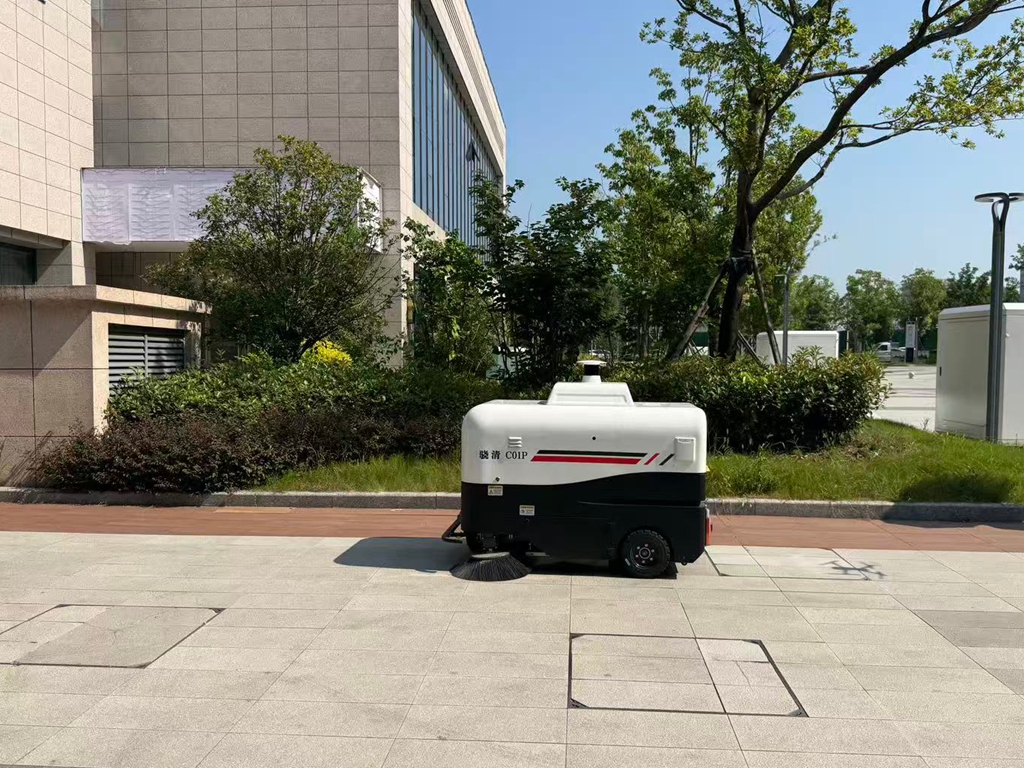
"Our team settled at the Hefei Institutes of Physical Science, CAS back in 2008 to conduct in-depth research on driverless algorithms, making us one of China’s earliest research teams engaged in autonomous driving R&D," said Yuan Sheng, Co-founder and Technical Director of CAS Juche.
In 2014, the Hefei Institutes of Physical Science, CAS and the Hefei Municipal Government jointly established the Hefei Innovation Institute, which is dedicated to advancing the industrial translation of CAS’s scientific research achievements and resolving the disconnect between scientific innovation and industrial development. Benefiting from supportive policies, CAS Juche settled in the institute in 2017 and was officially incorporated in 2018.
Recalling the startup days, Yuan Sheng sighed with emotion. The founding team only consisted of 3 to 4 technical staff, and the company has expanded to over 160 employees today, all thanks to the comprehensive support from the Hefei Innovation Institute.
Capital shortage stands as the primary bottleneck for fledgling tech enterprises, and the Hefei Innovation Institute delivered timely financing support.
"Just one or two months after our company’s establishment, the institute connected us with Hefei Industrial Investment and High-tech Zone Investment, securing a 2 million RMB angel investment for us," Yuan Sheng stated. All funds were invested in laboratory construction, equipment procurement and recruitment of R&D personnel to boost algorithm optimization, vehicle testing and product finalization. Mass-produced driverless shuttle buses rolled off the production line merely half a year later.
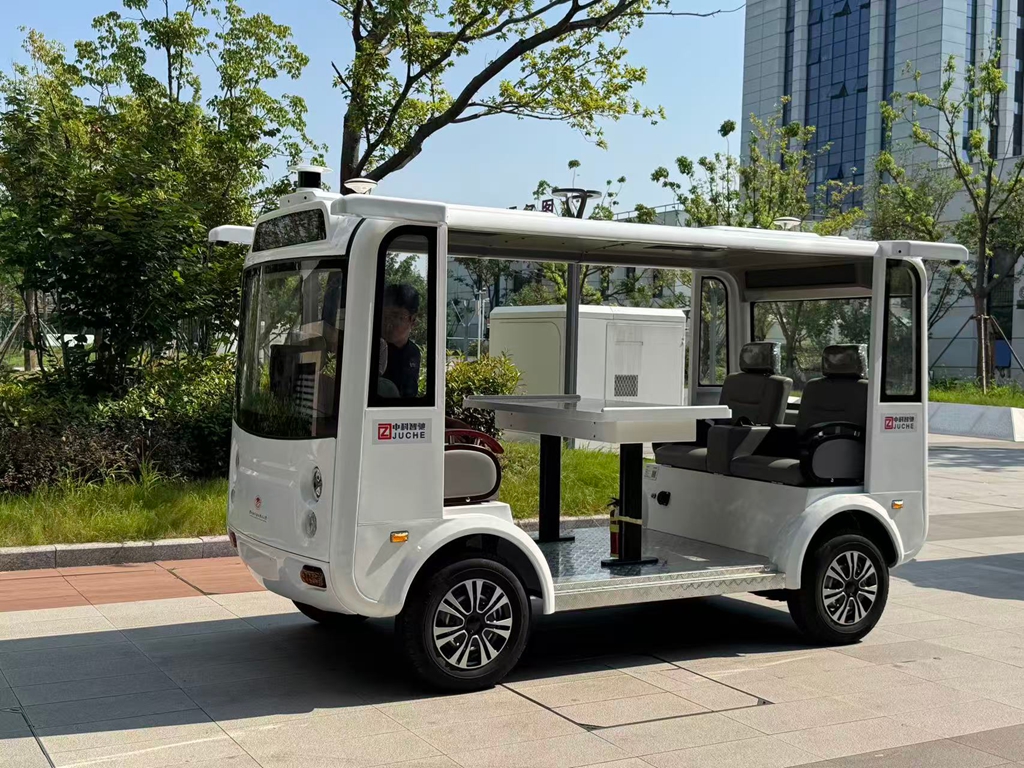
Apart from financial support, full-cycle supporting services make up for the development weaknesses of tech-only teams. Yuan Sheng mentioned that researchers excel at lab experiments yet lack experience in business negotiation and brand operation. The institute actively links enterprises with industrial exhibitions and media resources, continuously creating opportunities for external exposure and cooperation.
At present, CAS Juche has achieved full independent controllability of its core algorithms. Its autonomous vehicles have been applied in multiple scenarios including cultural tourism, environmental sanitation, logistics and the military industry, hitting an annual output value of 120 million RMB in 2025.
The rapid growth of CAS Juche serves as a typical example of how the Hefei Innovation Institute advances the industrialization of scientific research achievements.
As one of Anhui’s first batch of high-standard new-type R&D institutions, the institute has formed an exclusive model for coordinated industrial and research development. It breaks down barriers between scientific research and industrial application, coordinates the integrated development of education, technology and talents, and builds an innovation ecosystem featuring the integration of the innovation chain, industrial chain, talent chain, capital chain and service chain.
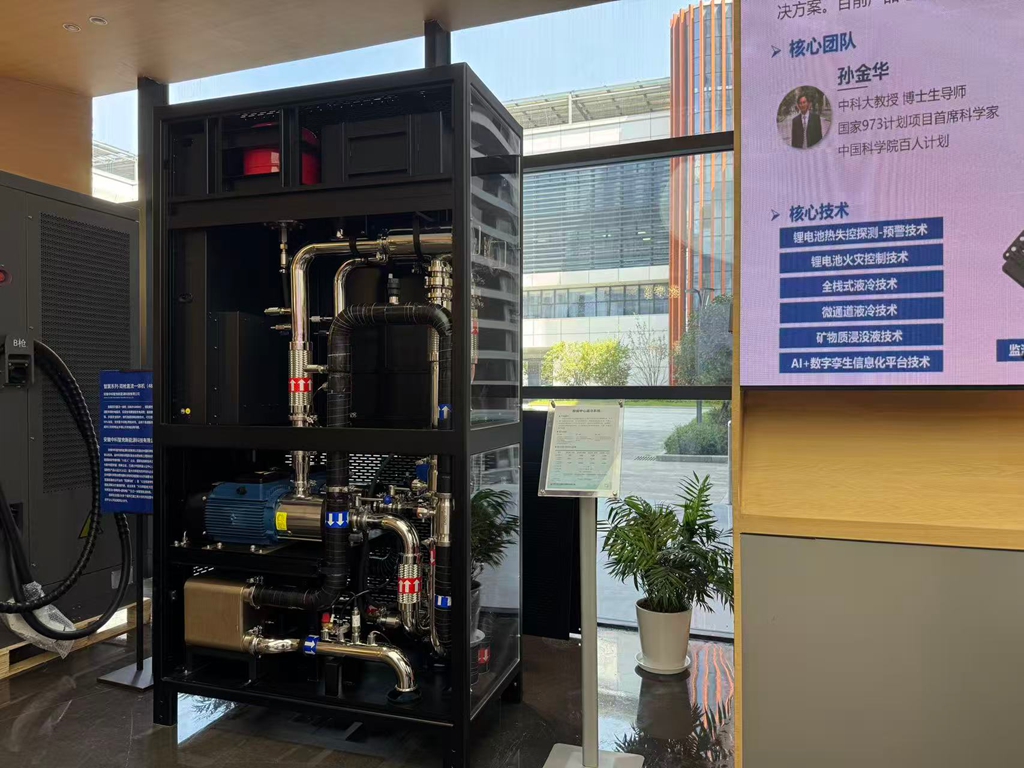
Zhang Jian, Vice President of CAS Hefei Institute of Technology Innovation, introduced that the institute discovers high-quality projects from frontline research teams. It cooperates with CAS and local universities to screen research teams with mature technologies and industrialization intentions, facilitates intellectual property docking and achievement commercialization, and customizes support packages based on enterprises’ different development stages.
In Zhang Jian’s opinion, this refined service system is the core reason why numerous innovation teams choose to settle in Hefei.
"We have formulated a 70:20:10 profit-sharing mechanism for revenue generated from IP commercialization: 70% of profits go to frontline research teams, 20% is reserved by the institute, and 10% of the institute’s share is specially used to reward staff engaging in achievement transformation services," Zhang Jian explained. This model with shared benefits and risks for all three parties establishes a long-term incentive mechanism encouraging researchers and service staff to promote research commercialization, greatly improving transformation efficiency.
With more than a decade of dedicated development, the institute has achieved remarkable results: it has incubated and introduced around 400 enterprises and held direct equity stakes in 209 firms. The total output value of incubated enterprises exceeds 5 billion RMB, including 92 High-tech Enterprises and 9 national-level Specialized, Sophisticated, Distinctive and Innovative "Little Giant" Enterprises. The total investment and financing obtained by incubated enterprises has surpassed 3 billion RMB.
Source: anhuinews.com
translated by Shao Hanzhe, intern
