您当前的位置:新闻>English
Anqing, January 2026 — The camera pans slowly across a cluttered yet purposeful studio. Ink stones rest beside modern laptops. Scrolls of Xuan paper lean against walls adorned with framed exhibition posters. In the center, under the careful glow of freshly positioned studio lights, sits painter Qin Wen — not painting, but preparing to be painted, in a sense, by the lens.
This is the set of "Brush and Ink from Anhui: A Portrait of the Greater Bay Area," a documentary feature that follows the Anhui-based artist through his reflections on cross-regional artistic exchange. Over the past two weeks, a three-person crew has been trailing Qin Wen between his Anqing studio, archival exhibition spaces, and symbolic locations across the city — capturing not his art, but his story.
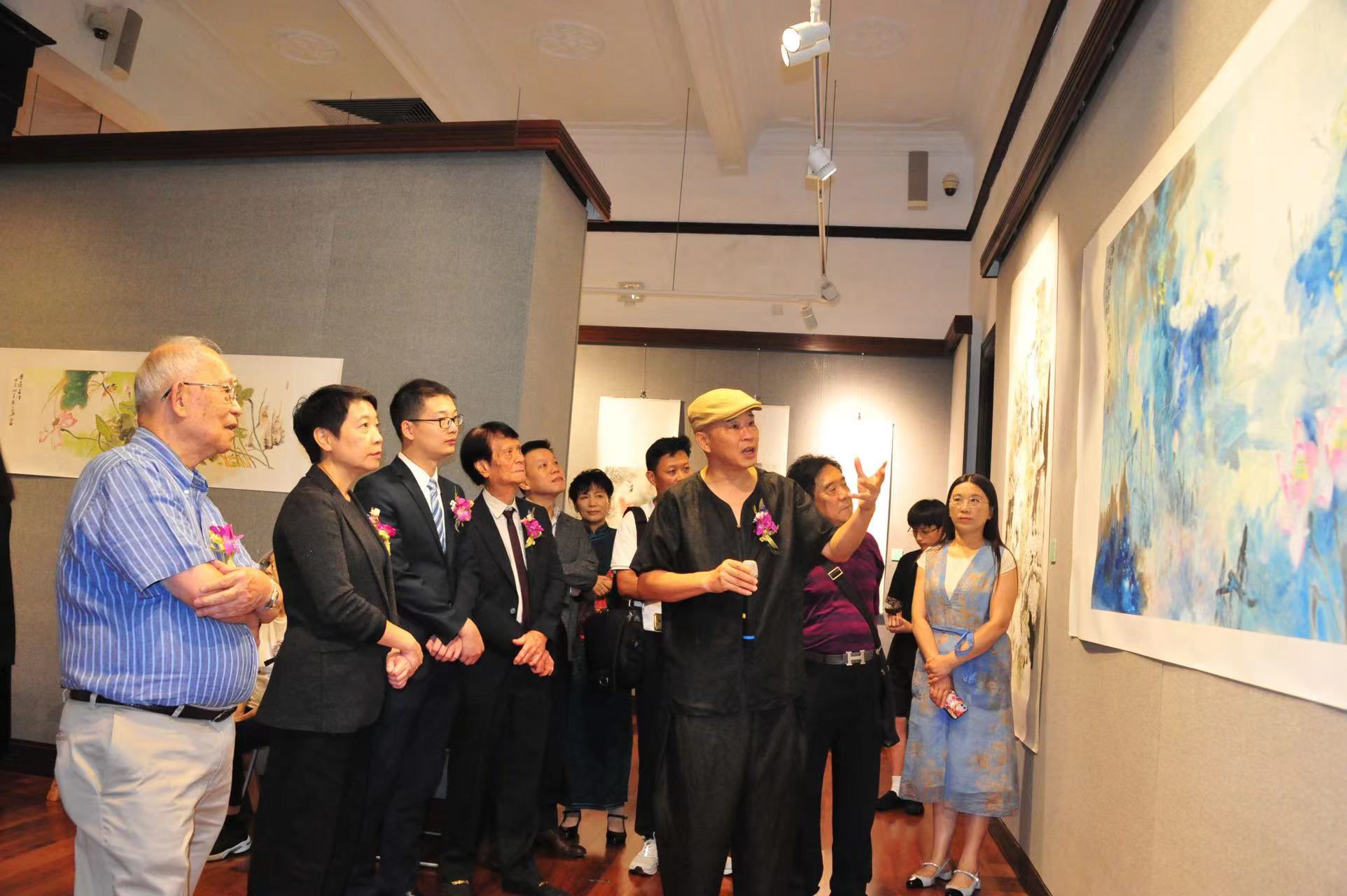
Setting Up the Conversation
The shoot began on a drizzly Monday morning at Qin Wen's studio in the suburb of Anqing. Director Qin Shuying and cinematographer Zang Weiwei and Wang Zikang arrived at 10:30 AM, three hours before the scheduled interview, to assess the space and plan their approach.
"We wanted the interview to feel intimate but not staged," Qin explained during a break in setup. "Qin's studio is where he thinks, where he prepares for exhibitions, where he returns after travels. It had to feel like his space on camera — not a television studio pretending to be an artist's workspace."
When Qin Wen arrived, he seemed unfazed by the production bustle. Dressed in a simple jacket over a collared shirt — his own clothes, chosen without stylist input — he settled into his usual chair. "Should I look at you or the camera?" he asked with a laugh. "I've been on the other side of the easel my whole life. This feels strange."
The crew laughed with him, and the ice was broken.
Capturing the Artist's Voice
The core interview spanned nearly three hours, though the final cut will use perhaps five minutes. Cinematographer Zang Weiwei and Wang Zikang employed a three-camera setup: a wide shot establishing Qin in his environment, a medium shot for natural conversation flow, and a tight close-up on his hands — constantly moving, gesturing, occasionally reaching for an ink stone or brush to illustrate a point.
Technical Challenges and Creative Solutions
Throughout the two-day shoot, the team navigated the usual documentary obstacles: unpredictable weather, equipment limitations (only one gimbal stabilizer for mobile shots), and the constant tension between capturing authentic moments and respecting the subject's comfort.
Cinematographer Zang Weiwei and Wang Zikang employed what they call "observational distance" — positioning cameras to minimize intrusion while maintaining visual interest. For the studio sequences, this meant hiding behind stacked paintings; for the ink workshop, shooting through doorways and around corners.
"Qin forgot we were there after about an hour," Zang noted. "That's the goal. When a subject stops performing for the camera, they start revealing themselves. We got our best material in hour three, not hour one."
What Comes Next
Post-production began immediately after the final shoot day. Editor Zang Weiwei and Wang Zikang face the formidable task of distilling over fifteen hours of footage into a five-minute film while preserving the intimacy and spontaneity captured on set.
"We came to film an artist discussing connection," Director Qin Shuying said during wrap. "But watching Qin revisit his Macao memories, watching the ink maker's hands, watching how this ancient tradition continues to live and breathe — we became part of that connection too. The camera wasn't just recording; it was participating."
Qin Wen, liberated from the interview chair and back at his easel, offered a simpler assessment: "They asked good questions. They listened to answers. They disappeared when they needed to. For a painter who's not used to be filmed, it was... almost comfortable."
The crew took that as the highest compliment.